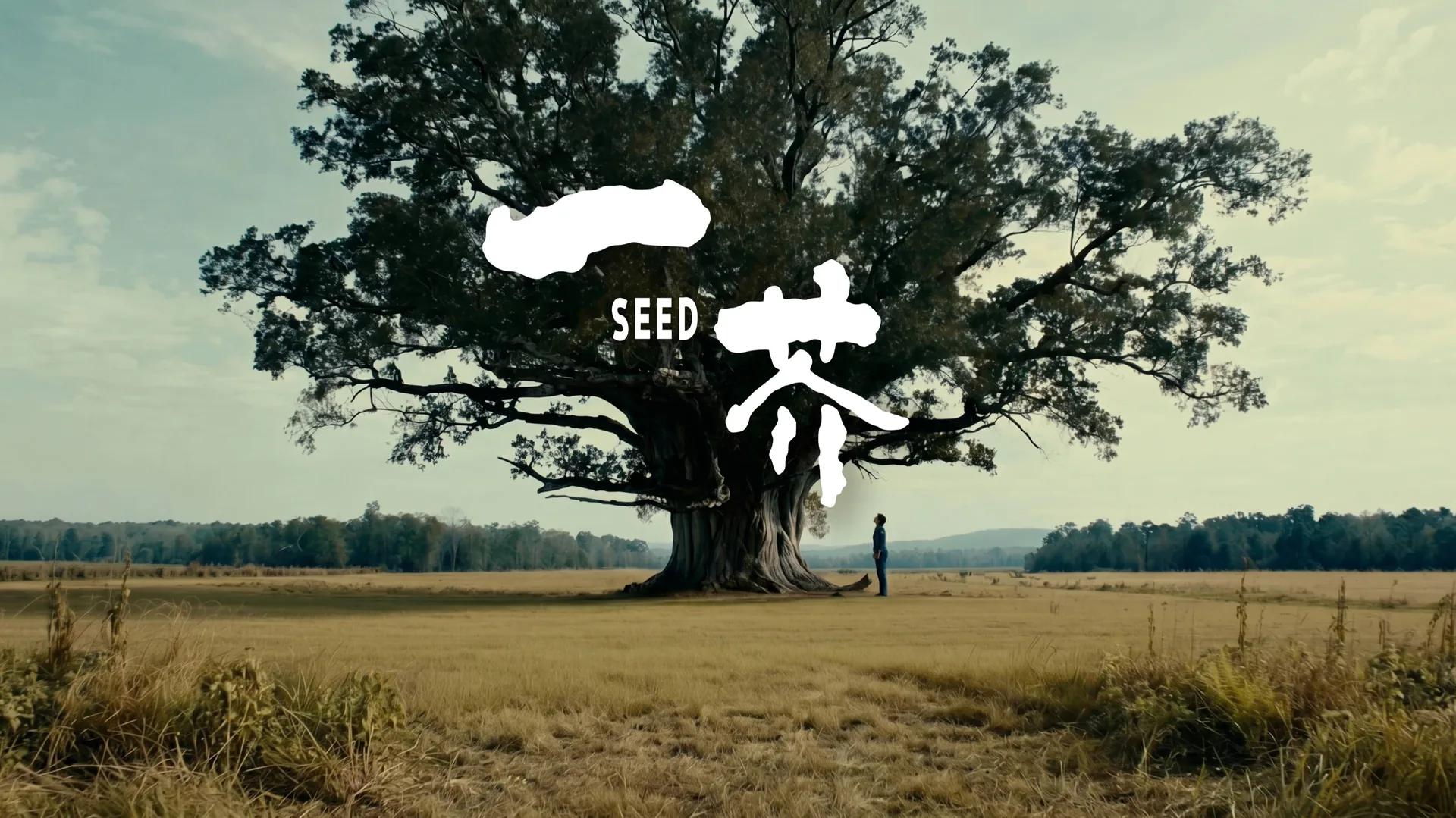
The title draws from the Buddhist idiom "a mustard seed holds Mount Sumeru." In Eastern philosophy, the minute and the vast do not oppose each other; inside a single mustard seed lies an entire boundless universe. This title refers both to the "seed" carrying the hope of life in the film, and to a deeper truth: the smallest living unit, the most intimate memory, the humblest handful of soil often harbors the potency to reboot an entire world.
The film's central conceit leads both protagonist and viewer to believe she has landed on an uncharted alien world. The starship, cockpit, desolate crimson badlands, and murky atmosphere forge an archetypal "interstellar exodus" imagery. Yet at the conclusion, as she unearths an ancient photograph from the dirt, the meaning of this exodus is radically inverted — she thought she had left Earth behind, but she had actually returned to it, bearing witness to its rebirth.
We did not intend to craft a technical time-space puzzle, but rather a poetic, symbolic return. "Returning to Earth" is fundamentally returning to humanity's original and indivisible bond with nature. Nature here is neither backdrop nor passive spectacle, but an active, surging force penetrating all things.
Humanity always imagines salvation lies elsewhere, in distant reaches and alien spheres; yet the true answer may have remained buried right beneath our feet, in this wounded soil that can still be healed.